
The life of Kal-El
1. Krypton and the escape
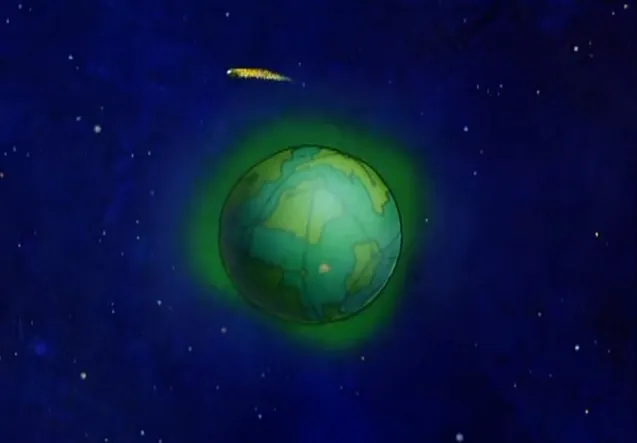
Krypton was an advanced world orbiting a red sun. Jor‑El, one of its leading scientists, calculated that the planet's core had become unstable and that Krypton would be destroyed. His warnings were dismissed by the ruling council, and with no time left to save the population he and his wife Lara placed their infant son in an experimental rocket and launched it towards Earth. The planet was destroyed moments later, making the child the last survivor of an entire civilisation.
The detail matters because it sets the emotional problem the character carries in every version: he is the only one of his kind, he remembers none of it, and the culture he lost is available to him only as a recording. Later stories gave that loss a physical home in the Fortress of Solitude, a hidden Arctic base holding Kryptonian archives, technology and the preserved knowledge of his birth parents.
2. Smallville and the Kent family
The rocket lands near the small farming town of Smallville, Kansas. Jonathan and Martha Kent, a childless couple, find the child and raise him as their own son under the name Clark Kent. As his abilities appear during childhood they teach him to hide them, and, more importantly, to use them responsibly. In almost every retelling the Kents are the reason the character turns out the way he does: the powers come from Krypton, but the values come from Kansas.
The Smallville years were later expanded into their own franchise. From 1945 the character appeared as Superboy in stories about his teenage career, and that material eventually produced the Legion of Super‑Heroes, a team of thirty‑first century heroes inspired by his example.
3. Metropolis and the Daily Planet
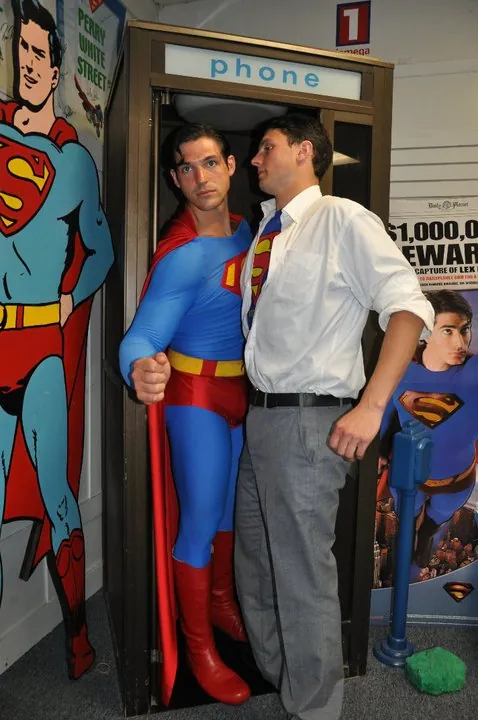
As an adult Clark Kent moves to Metropolis and is hired as a reporter by the Daily Planet. The newsroom supplies the character's supporting cast: Lois Lane, the paper's star investigative reporter; Jimmy Olsen, the young photographer; and Perry White, the demanding editor‑in‑chief. Lois is the most important of the three. She was present in the very first story in 1938, she was written from the start as a better reporter than Clark, and the long triangle between Lois, Clark and Superman became one of the defining elements of the series. The two characters were eventually married in the comics in 1996.
4. Powers, and how they grew
Superman's abilities come from the way Kryptonian physiology processes the radiation of a yellow star. In 1938 the list was short and almost athletic. He could lift enormous weights, outrun a train, resist anything short of a bursting artillery shell and leap an eighth of a mile, but he could not fly. Flight arrived through the radio serial and the Fleischer cartoons, largely because animating a leap over and over looked repetitive, and the comics adopted it.
By the late 1950s the character had accumulated heat vision, x‑ray vision, freezing breath, super hearing and near invulnerability, and writers were struggling to build threats around him. Every major reboot since has begun by reducing the power set again, which is why the abilities differ noticeably between one era and the next.
Superman keeps working because the danger in his stories is almost never physical. The interesting question is what a person with that much power chooses not to do. A recurring theme across every publishing age
5. Weaknesses
The two classic vulnerabilities are kryptonite and magic. Kryptonite, irradiated fragments of his destroyed home world, was introduced on the radio programme in 1943 and reached the comics in 1949; the green variety weakens and can kill him, while later stories added other colours with stranger effects. Magic bypasses his invulnerability entirely. A third limit is practical rather than physical: he draws his energy from a yellow sun, so prolonged exposure to a red sun such as Krypton's own reduces him to ordinary human strength.
6. Allies and enemies
His closest allies are his Kryptonian cousin Kara Zor‑El, known as Supergirl, who was introduced in 1959, and Krypto the Superdog. Outside Metropolis he is a founding member of the Justice League alongside Batman and Wonder Woman, and the contrast between his optimism and Batman's suspicion has driven decades of crossover stories.
The central enemy is Lex Luthor, a Metropolis businessman and scientist whose objection to Superman is ideological as much as personal: he argues that humanity will never solve its own problems while it can rely on an alien to do it. Other recurring opponents include Brainiac, a Kryptonian‑linked artificial intelligence that collects and shrinks cities; General Zod, a Kryptonian military officer exiled before the planet's destruction; Bizarro, an imperfect duplicate; and Doomsday, the creature that killed him in the 1992 storyline The Death of Superman.